Guide
Pour-Over Coffee Ratio Explained
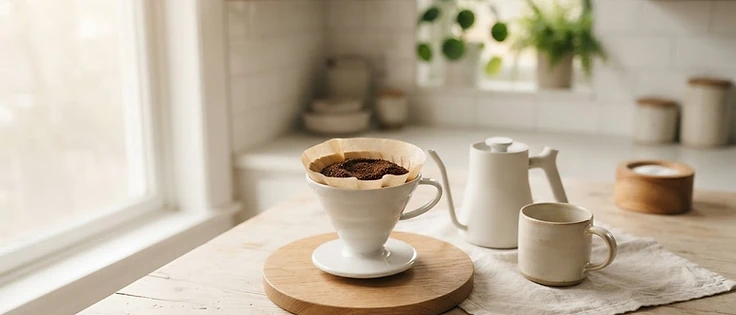
The starting recipe
15g of coffee, 250g of water, ground medium-fine. Bloom for 30 seconds with roughly twice the coffee's weight in water, then pour in steady spirals to 250g by 2:00, finishing the drawdown by 2:45.
Why the ratio comes first
Ratio decides how much coffee is available to extract. Grind and time decide how much of it actually ends up in the cup. Setting the ratio first gives you a fixed reference point, which is what makes dialling in possible at all.
Pour-over doses at 1:16.7
| Cup size | Coffee | Water |
|---|---|---|
| One cup | 15 g | 250 ml |
| Two cups | 22 g | 370 ml |
| Three cups | 30 g | 500 ml |
Dialling in
If the cup is sour, grind finer. If it is bitter and slow, grind coarser. Change one variable at a time, and keep the ratio fixed while you do it.
Equipment for this guide
Sources & further reading
- Brewing fundamentals and ratio guidanceSpecialty Coffee Association
Keep reading
article
How Much Coffee Should You Use for 500ml of Water?
For a 500ml brew, a 1:16 coffee-to-water ratio is a good starting point — about 31g of coffee. Here's how to dial it in.
Readarticle
Coffee Ratio Chart: From 250ml to 1 Litre
One table that covers the doses you actually brew — 250ml, 350ml, 500ml, 750ml and 1 litre — at four common ratios.
Readarticle
Drip Coffee Ratio: A Practical Guide
Drip brewers extract differently from pour-over. Here's the ratio that suits a machine, and why the classic numbers shift.
Read