Food & Drink · Coffee
Coffee Ratio Chart: From 250ml to 1 Litre
One table that covers the doses you actually brew — 250ml, 350ml, 500ml, 750ml and 1 litre — at four common ratios.
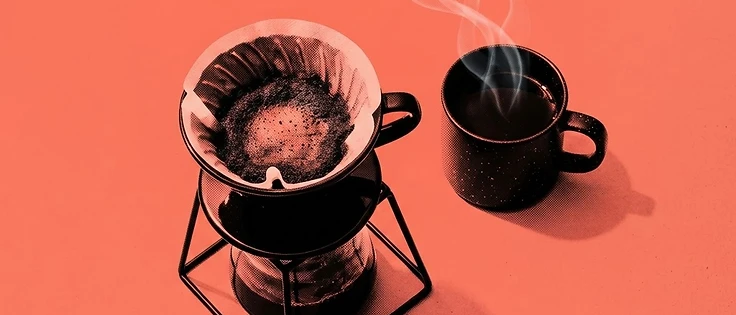
Image: Daily Roaster
The chart
Coffee dose in grams by water volume and ratio
| Water | 1:15 | 1:16 | 1:17 | 1:18 |
|---|---|---|---|---|
| 250 ml | 16.7 g | 15.6 g | 14.7 g | 13.9 g |
| 350 ml | 23.3 g | 21.9 g | 20.6 g | 19.4 g |
| 500 ml | 33.3 g | 31.3 g | 29.4 g | 27.8 g |
| 750 ml | 50.0 g | 46.9 g | 44.1 g | 41.7 g |
| 1000 ml | 66.7 g | 62.5 g | 58.8 g | 55.6 g |
How to read it
Read down for volume, across for strength. A lower second number (1:15) means more coffee and a stronger cup. A higher one (1:18) means less coffee and a lighter, more tea-like brew. Most people settle between 1:15 and 1:17 depending on the roast.
Why these numbers are not absolute
A ratio sets the starting point, not the result. Extraction — grind, water temperature, agitation and time — decides how much of that coffee actually ends up in the cup. Two brews at identical ratios can taste completely different.
Scale it without arithmetic
Our ratio calculator takes a dose and a ratio and returns the water volume, so you can work backwards from the coffee you have already ground.
Sources & further reading
- Brewing fundamentals and ratio guidanceSpecialty Coffee Association
Spotted an error? Tell us — corrections are public.
Equipment mentioned

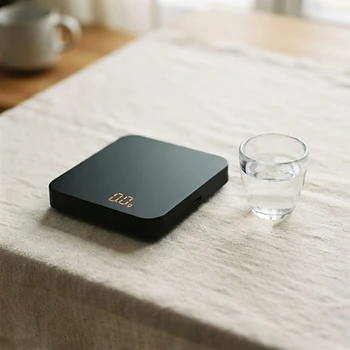
Acaia
Pearl S Digital Scale
A fast, responsive 0.1g scale with a flow-rate display. Takes the guesswork out of pour-over and espresso dosing.
Keep reading
article
How Much Coffee Should You Use for 500ml of Water?
For a 500ml brew, a 1:16 coffee-to-water ratio is a good starting point — about 31g of coffee. Here's how to dial it in.
Readarticle
Drip Coffee Ratio: A Practical Guide
Drip brewers extract differently from pour-over. Here's the ratio that suits a machine, and why the classic numbers shift.
Readguide
Pour-Over Coffee Ratio Explained
A repeatable pour-over recipe: dose, ratio, grind, pour structure and timing — explained for beginners and dialled-in brewers.
Read