Food & Drink · Coffee
Drip Coffee Ratio: A Practical Guide
Drip brewers extract differently from pour-over. Here's the ratio that suits a machine, and why the classic numbers shift.
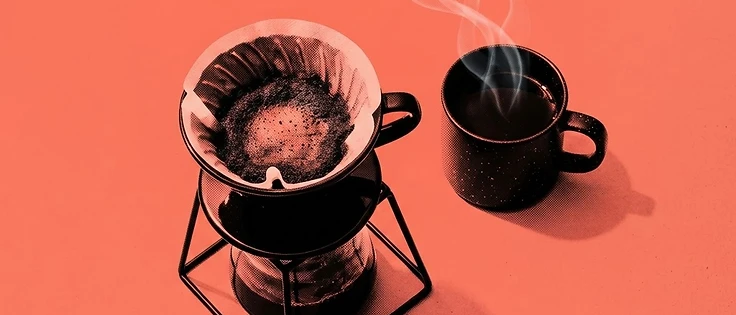
Image: Daily Roaster
The starting point
Use 1:16 by weight as the baseline for a drip machine — about 60g of coffee per litre of water. If your machine holds heat well and finishes a brew in under six minutes, 1:17 often tastes cleaner.
Why drip is not just slow pour-over
A machine controls the pour, the water temperature and the contact time for you. That consistency is the advantage and the limitation: when a brew tastes wrong, you cannot fix it mid-pour, so the grind and the dose have to do the work.
Adjusting the cup
- Thin and sour: grind finer or increase the dose slightly.
- Harsh and drying: grind coarser or drop the dose.
- Bitter at the end of the pot: the machine is holding coffee on a hot plate — decant it.
Measure the water, not the markings
Reservoir markings are approximate. Weighing the water you actually put in removes the largest source of error in a machine brew, and takes about ten seconds.
Sources & further reading
- Brewing fundamentals and ratio guidanceSpecialty Coffee Association
Spotted an error? Tell us — corrections are public.
Equipment mentioned

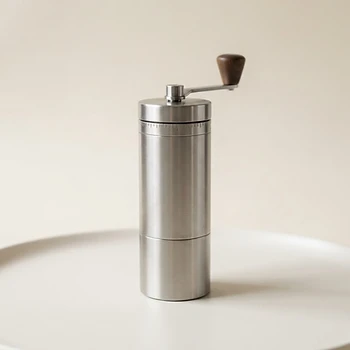
Baratza
Encore Burr Grinder
A reliable entry-level burr grinder with 40 grind settings. Consistent particle size makes it the default choice for pour-over and drip brewers.

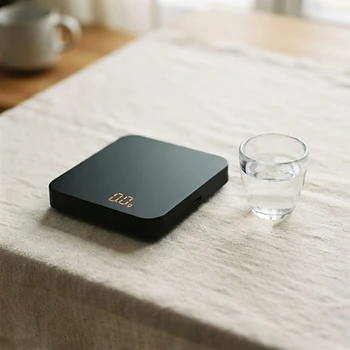
Acaia
Pearl S Digital Scale
A fast, responsive 0.1g scale with a flow-rate display. Takes the guesswork out of pour-over and espresso dosing.
Keep reading
article
Coffee Ratio Chart: From 250ml to 1 Litre
One table that covers the doses you actually brew — 250ml, 350ml, 500ml, 750ml and 1 litre — at four common ratios.
Readarticle
How Much Coffee Should You Use for 500ml of Water?
For a 500ml brew, a 1:16 coffee-to-water ratio is a good starting point — about 31g of coffee. Here's how to dial it in.
Readguide
Pour-Over Coffee Ratio Explained
A repeatable pour-over recipe: dose, ratio, grind, pour structure and timing — explained for beginners and dialled-in brewers.
Read